
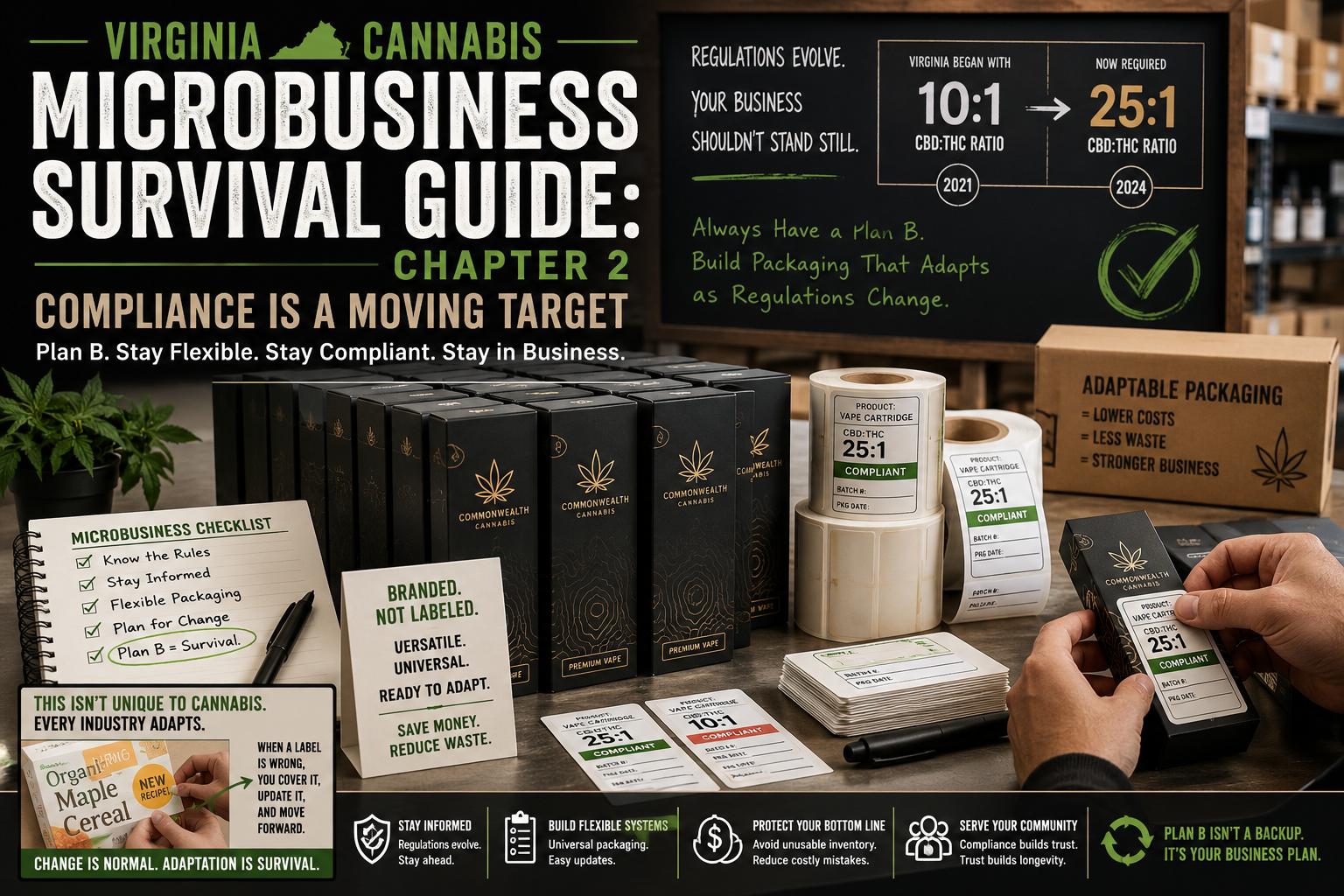
Compliance Is Not a Destination, It Is a Moving Target
One of the biggest mistakes new cannabis businesses make is assuming that once they become compliant, they are finished. In reality, compliance in cannabis is constantly evolving, especially in a young market like Virginia.
The businesses that survive long term are not always the ones with the biggest budgets or the flashiest branding. Often, they are the businesses that planned ahead, stayed flexible, and adapted quickly when regulations shifted.
Virginia has already shown how quickly rules and interpretations can change.
At one point, Virginia’s hemp market operated around a 10:1 CBD to THC ratio concept for certain products and guidance. Later, that shifted toward a 25:1 ratio framework in some discussions and interpretations. Regardless of where someone stands politically or medically on those changes, the lesson for operators is clear:
Rules change.
Packaging requirements changes.
Labeling requirements change.
Testing standards change.
Definitions change.
And when they do, businesses that overcommitted to rigid systems often take the hardest financial hit.
Your Packaging Should Be Built to Adapt
One of the smartest strategies a cannabis microbusiness can adopt is creating packaging systems that are versatile, reusable, and easy to modify.
This does not mean your branding should be weak or generic. Quite the opposite.
Your packaging should be strongly branded, visually recognizable, and professionally designed. What it should not be is permanently tied to details that may change overnight.
A great example is vape packaging.
Many businesses make the mistake of printing large runs of highly specific vape boxes that include:
- Strain names
- THC percentages
- Batch numbers
- QR codes tied to a specific COA
- Compliance language
- Ingredient disclosures
- Regulatory symbols
The problem is that all of those things can change.
Maybe the strain name gets modified for compliance reasons. Maybe testing comes back differently than expected. Maybe new warning labels become mandatory. Maybe regulators change how terpene disclosures must appear. Maybe a product gets moved from one category to another.
Suddenly, thousands of dollars in packaging become unusable.
A smarter system is to separate branding from final compliance labeling.
For example:
- Create a high quality branded vape box that works for multiple products.
- Keep the design universal enough to support several strains or formulations.
- Leave variable compliance information off the permanent print.
- Add product-specific details later using:
- compliant stickers,
- printed labels,
- hang tags,
- batch labels,
- or in-house print systems.
This creates flexibility while still maintaining a polished retail appearance.
This Happens in Every Industry
Cannabis operators sometimes feel embarrassed when they need to relabel products or cover outdated packaging. In reality, this happens constantly across almost every retail industry.
Anyone who has worked in manufacturing, food service, supplements, cosmetics, or consumer goods has seen situations where companies had to send teams out with rolls of stickers to correct labels already sitting on shelves.
Maybe nutrition facts changed.
Maybe allergen language was updated.
Maybe there was a typo.
Maybe legal approved wording changed after production.
Maybe a UPC code was wrong.
This is normal business reality.
The difference is that cannabis businesses operate in a far more volatile regulatory environment, meaning these situations should not be viewed as rare exceptions. They should be expected operational possibilities.
Compliance Planning Is Financial Planning
For small cannabis operators, adaptability is not just about compliance. It is about survival.
Every dollar tied up in unusable packaging is money that cannot go toward:
- payroll,
- cultivation,
- inventory,
- licensing fees,
- testing,
- marketing,
- or expansion.
Large corporations can sometimes absorb those losses. Most microbusinesses cannot.
That is why flexible systems matter.
A microbusiness should constantly ask:
- Can this package serve multiple products?
- Can this label be updated quickly?
- Can we pivot if regulations change next month?
- Can we comply without throwing away inventory?
- Can we adjust in-house without waiting months for a reprint?
The businesses that answer “yes” to those questions are often the ones still standing years later.
Always Have a Plan B
Cannabis regulations are still being written in real time. Virginia’s market will continue evolving, and operators should expect future changes involving:
- packaging,
- serving sizes,
- testing,
- marketing restrictions,
- cannabinoid definitions,
- labeling language,
- and product classifications.
That is not pessimism. That is realism.
Building adaptable systems from the beginning is not about fear. It is about resilience.
The cannabis businesses that survive long term will not simply be the ones that launch successfully. They will be the ones prepared to shift when the market inevitably changes around them.